

The Most Common Carport Designs in the UK
Introduction
Carports have become an increasingly popular alternative to full garages across the UK, offering affordable, flexible, and visually appealing protection for vehicles. These vehicle shelters can be attached to a home, positioned as a standalone structure, or designed for commercial use.
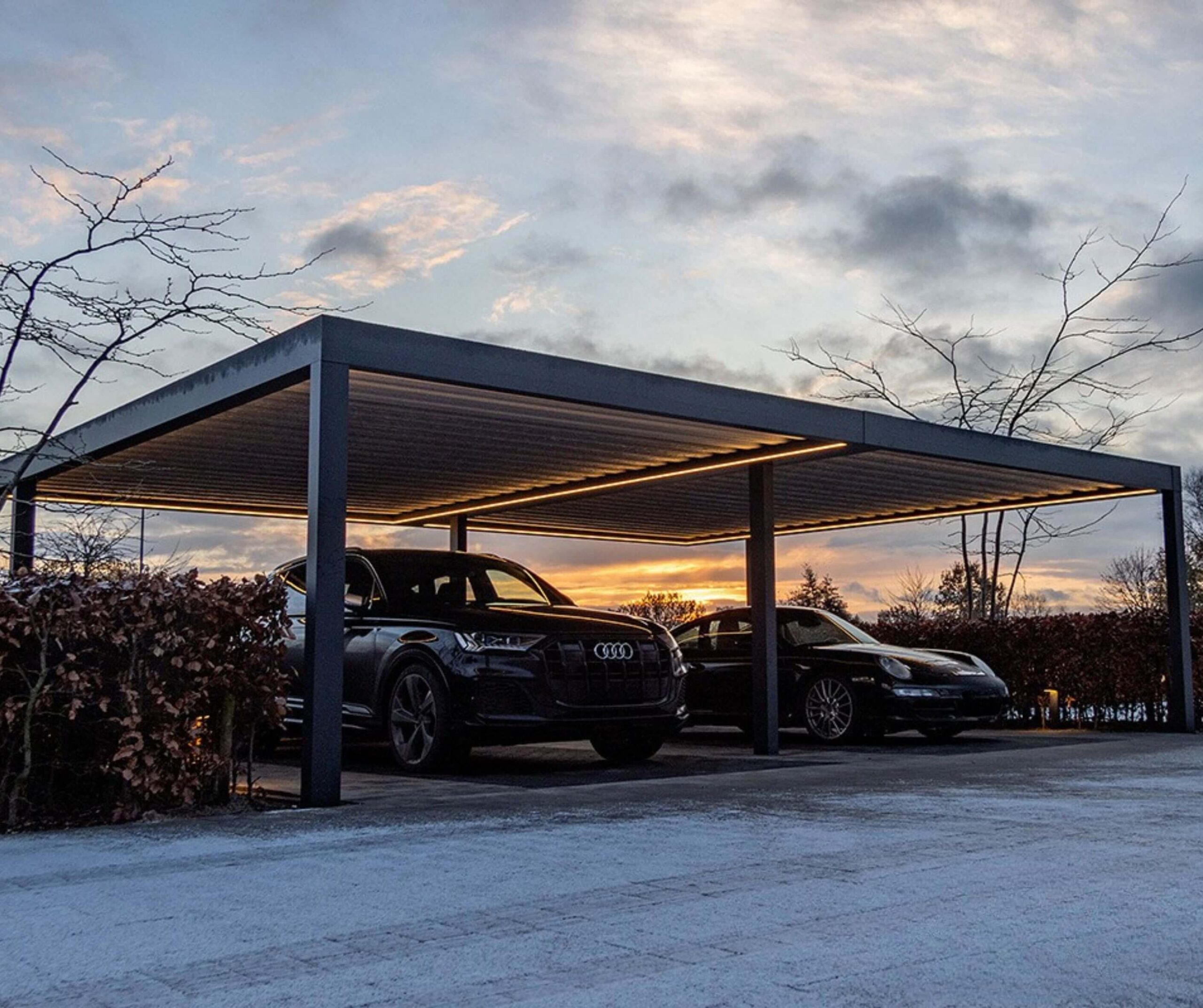
This guide explains the most common carport designs found across the UK, along with additional variations that homeowners and businesses often consider.
Carport Types
Free-standing Carport
Free-standing carports are independent structures that do not rely on an existing building for support. They are ideal for properties with open space or when the carport needs to be positioned away from the home, for example, near a driveway entrance or on commercial sites.
Lean-to Carport
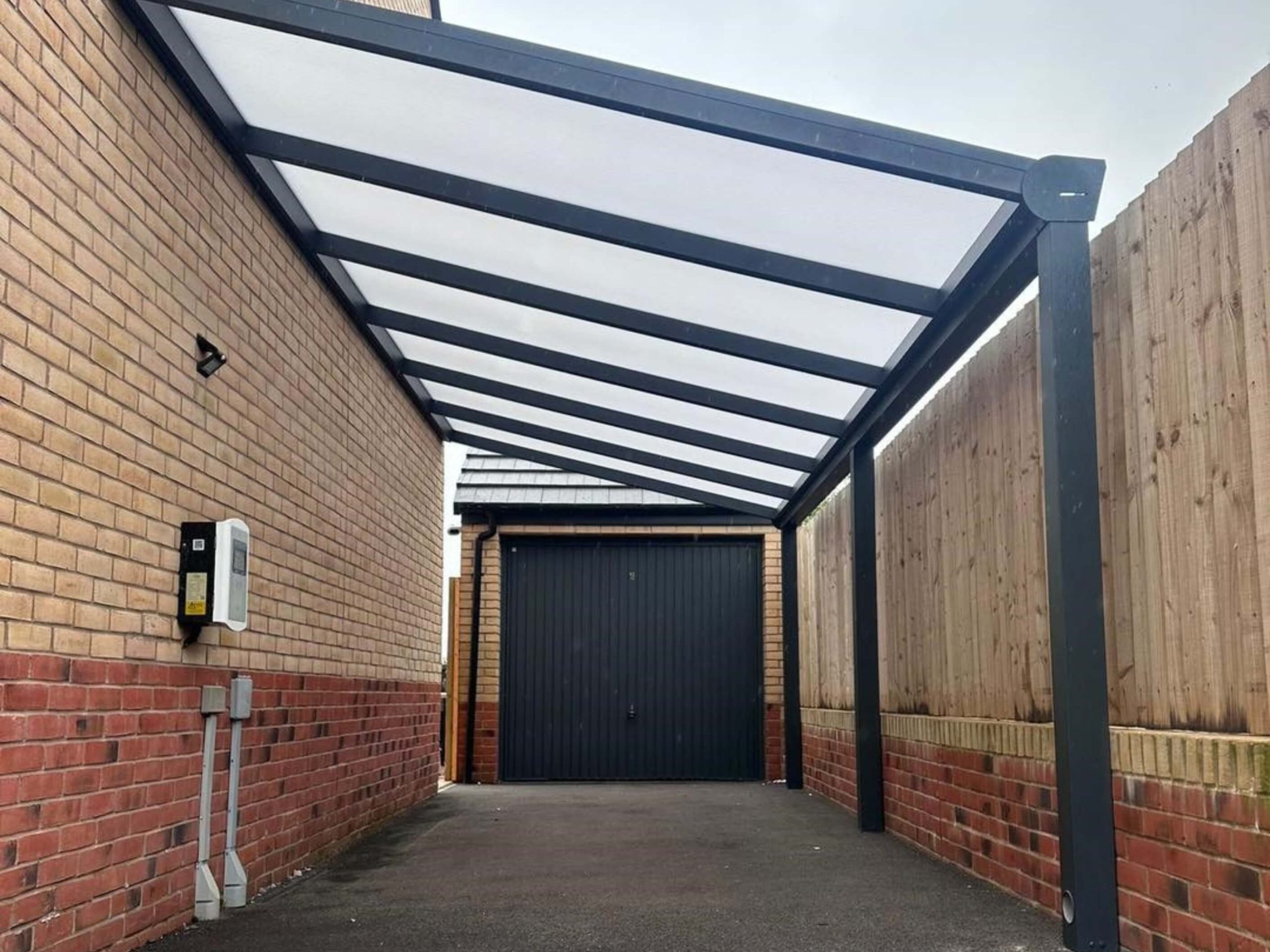
Lean-to carports attach directly to a house or outbuilding. They are particularly popular in the UK where driveway space is often limited. This type acts as a seamless extension of existing architecture and is ideal for narrow driveways or side-of-house parking.
Carport Designs
Single Carport
Single carports are designed to shelter one vehicle, making them a compact and cost-effective solution for one-car households in the UK. Despite being a single-vehicle solution, the layout can feel constrained when used with larger models.
Double Carport
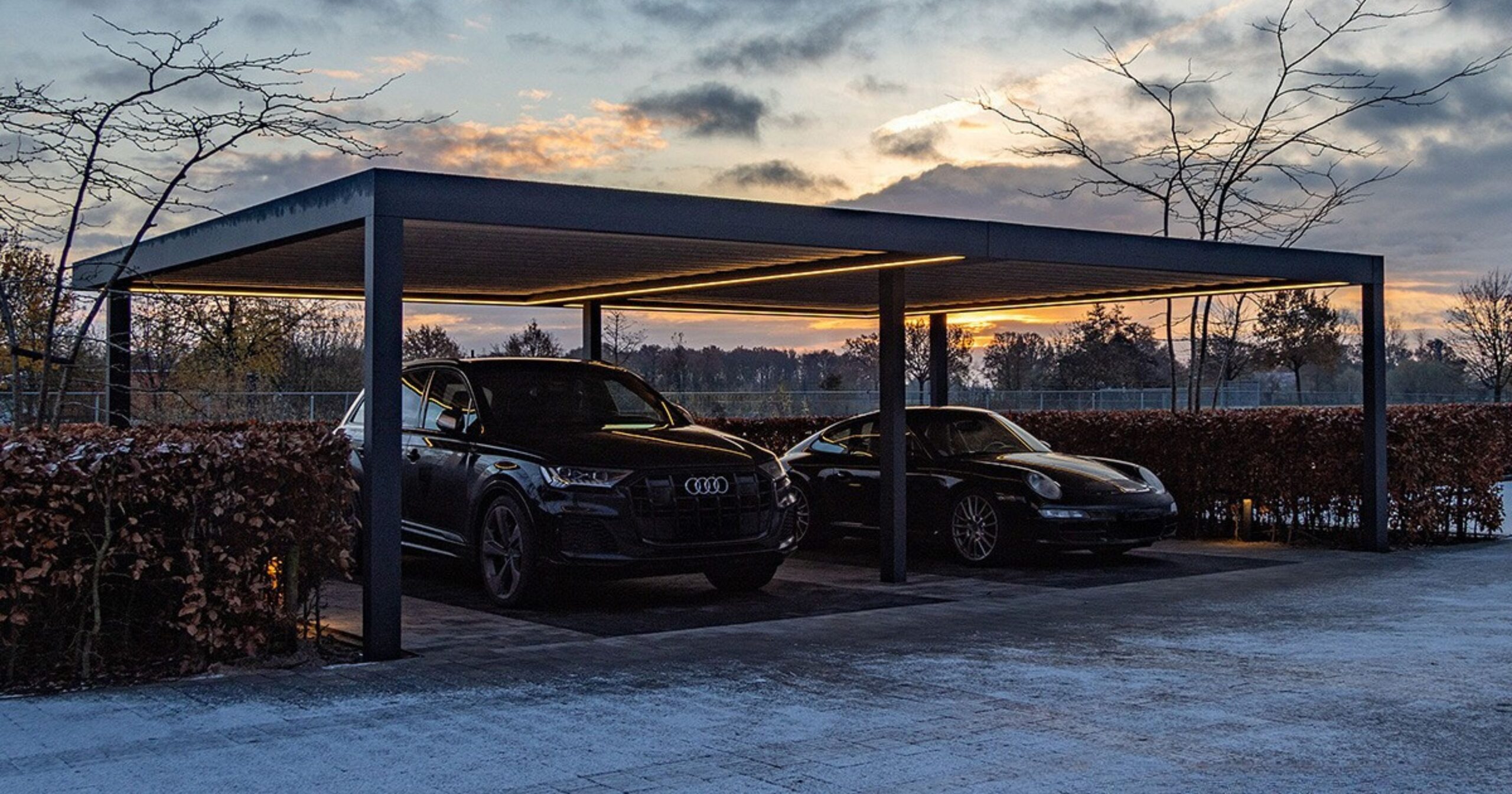
Double carports can accommodate two vehicles side by side, which makes them a practical choice for larger households. However, the wider span requires more structural support, which therefore increases the cost of building one.
Commercial Carport
Commercial carports are increasingly used by institutional facilities and private businesses, to accommodate a fleet of vehicles, or provide sheltered parking for staff members and guests. Common applications include retail parks, office buildings, warehouses, residential complexes, car dealerships and public sector facilities. It is important to note that planning and installation for this design is more complex because the footprint, drainage requirements, and wind-load calculations are significantly higher than that of domestic carports.
Carport Roof Configurations
Flat Roof
Flat roofs are a common choice for free-standing and commercial carports, and often a practical solution for height-restricted spaces. However, drainage efficiency can be weaker than pitched designs, hence this configuration may require more ongoing maintenance to clear debris and standing water from the roof.
Pitched Roof
Pitched roofs are commonly used for lean-to carport installations, especially in residential settings. Their angled design encourages efficient water runoff, reducing both maintenance needs and debris build-up compared with flat roofs.
Carport Roof Materials
Toughened Glass Roof
Although heavier than alternative roofing materials, toughened glass gives the carport a high-end, architectural finish. However, opting for laminated or UV-coated glass is recommended, as this offers significantly better protection against UV exposure on bright, sunny days.
Polycarbonate Roof
This may not always provide the premium look and finish like a glass roof does but it is one of the most popular choices for domestic and commercial use, as it is more affordable, yet provides a strong UV-protection for vehicles sheltered underneath.
Conclusion
Each carport design has a clear purpose and a specific set of benefits and limitations. The most suitable option depends on property layout, local weather patterns, budget, and the level of convenience required.
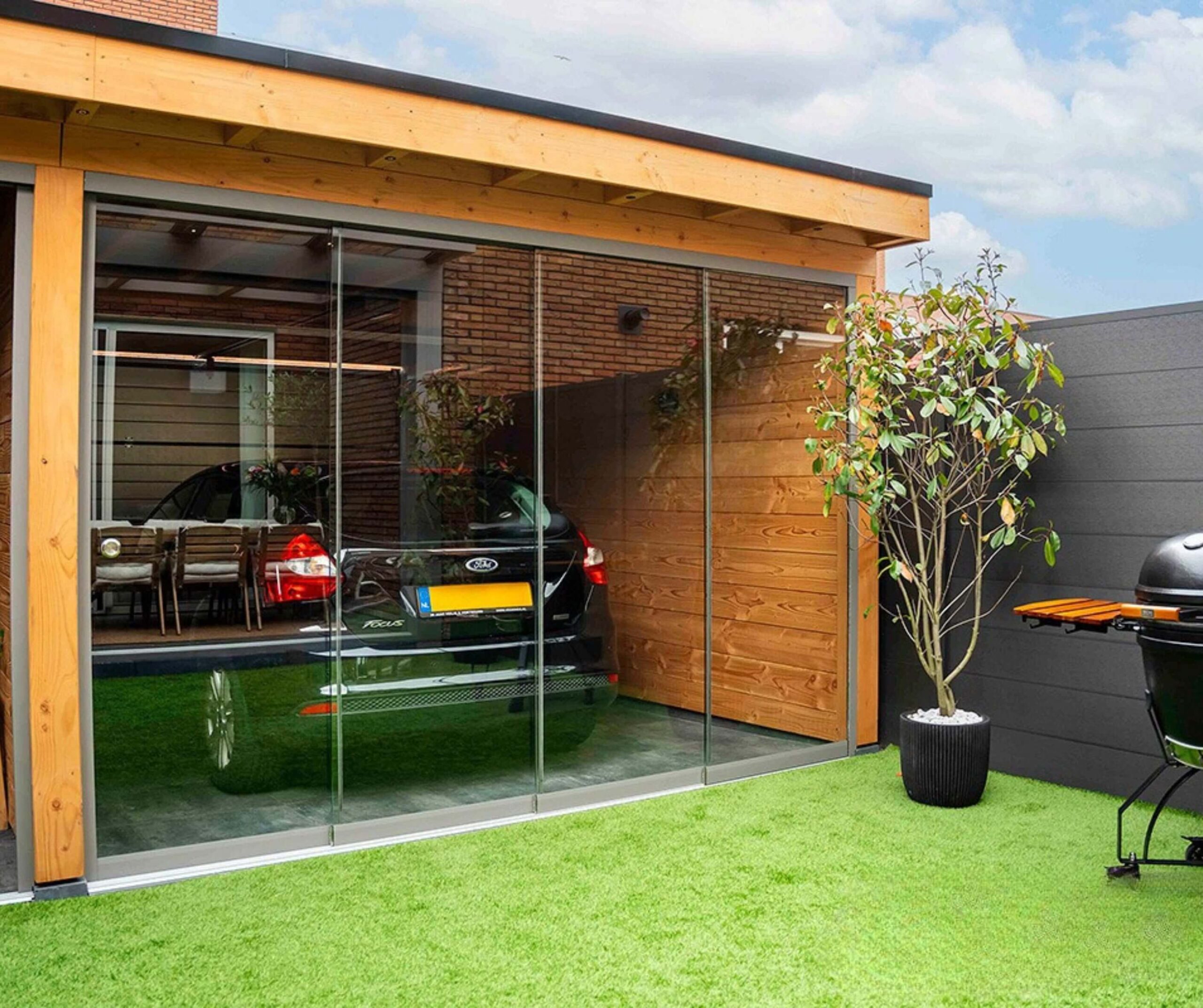
By understanding the primary structures, roof types, and design variations, it can help you confidently select a carport that suits both functional needs and visual appeal.
Got a Question?
Got a question about carport designs, roofing choices, or technical details? Send us a message via the form below and we will assist you.
In the meantime, you can also browse the commonly asked questions below for quick answers.
Commonly Asked Questions
Protection against ultraviolet rays that cause fading, ageing and sun damage to the body and paint of vehicles.
Yes, when properly installed and rated for local wind loads, they are designed to withstand strong winds.
A strong, lightweight thermoplastic made from polycarbonate polymer resin. This impact-resistant material is widely used for roofing and glazing.
Related Blog Posts

A Full Guide on Carports: Planning, Installation & Regulations
Introduction
If you’re considering installing a carport in your driveway or attaching one to your house, you may have questions about planning permission, construction feasibility, and design options.
In this guide, we’ll answer the most common questions about carports to help you make an informed decision.
What is a Carport?
Carports are an excellent addition to any property, providing a stylish yet cost-effective solution for vehicle protection. A carport is a semi-open structure designed to provide shelter for vehicles. Unlike a traditional garage, which is enclosed on all sides, a carport typically consists of a roof supported by posts or columns, without walls.
Modern carports come in a variety of materials and designs. Aluminium-framed carports with glass or polycarbonate roofs are particularly popular due to their durability, sleek appearance, and weather-resistant properties.
These structures can be freestanding or attached to a house, making them a versatile option for homeowners. Let’s look at some of the most common questions around carports below.
Do you need Planning Permission for a Carport?
One of the biggest concerns for homeowners is whether planning permission is required for a carport. The good news is that in most cases, carports fall under Permitted Development Rights, meaning you can install one without formal planning approval. However, there are a few conditions to consider:
- The carport must not be higher than 2.5 metres if within 2 metres of a boundary, or 4 metres if further away.
- It must not cover more than 50% of your property’s land, including outbuildings, sheds, and other structures, to ensure compliance with local planning regulations.
- The carport cannot be built forward of the front elevation of your house (i.e., it should not be closer to the road than your home).
- If your home is in a conservation area, national park, or a listed building, you may need additional permissions.
While most carports do not require planning permission, checking with your Local Council is always recommended to ensure compliance with regional regulations. Further information on planning permissions can be found on the Planning Portal.
Can I build a Carport on my Driveway?
Yes! A carport can be installed in your driveway, provided there is enough space and the structure adheres to local building regulations. When planning a carport for your driveway, consider the following:
- Size and Placement: Ensure the carport fits within your property boundaries and allows easy access for vehicles.
- Material Selection: We use aluminium for the frames of our carports due to their exceptional durability, lightweight properties, and resistance to rust and corrosion. Aluminium requires minimal maintenance, making it an ideal choice for long-term outdoor structures.
- Ground Preparation: A level, stable base (such as concrete, tarmac, or paving) is ideal for securing the structure.
- Drainage Considerations: Proper water drainage should be planned to prevent puddles or runoff issues. Our carport builds come with concealed drainage, ensuring efficient water management without compromising on aesthetics.
Installing a carport in your driveway is an excellent way to protect your vehicle from various weather conditions while adding value to your property.
Can a Carport be attached to a House?
Yes, carports can be attached to a house, creating a seamless extension that provides additional weather protection.
Attached carports are a great choice for homeowners who want easy access to their vehicle while maintaining an aesthetically pleasing design which blends with the property. However, when attaching a carport to your house, you should consider:
- Structural Integrity: The supporting wall must be strong enough to hold the weight of the carport’s roof, as well as withstand additional forces such as wind pressure and potential snow accumulation. A structurally sound wall ensures stability and longevity, preventing sagging or damage over time.
- Roofing: Choose a roof which suits your needs. Glass roofs offer a modern, smooth appearance while allowing natural light to filter through, creating a bright and airy space. Polycarbonate roofs are lightweight and highly durable, providing excellent UV protection and resistance to impact, making them an ideal choice for long-term outdoor use.
- Building Regulations: If the carport extends more than 30 square meters in floor area or projects significantly beyond the front elevation of the house, it may require building approval to ensure safety compliance.
Attached carports provide excellent protection from rain, snow, and sun while seamlessly integrating into your home’s exterior.
Conclusion
A carport is a fantastic addition to any home, offering a practical and visually appealing way to shelter vehicles. Whether you’re considering a freestanding or attached aluminium carport with a glass or polycarbonate roof, understanding planning regulations and installation requirements is essential.
If you’re ready to install a stylish and durable carport, contact our team today for expert advice and professional installation.
Contact Us